
Spotted Lanternfly Host Trees
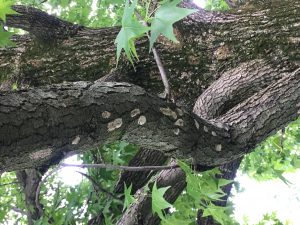
Known Trees Attacked By Spotted Lanternflies
| Tree of Heaven | Birch | Linden |
| Black Walnut | Cherries | Pine |
| Willow | Peaches | Black Gum |
| Apple | Oak | Grape |
| Hickory | Service Berry | Tulip Poplar |
| Maple | American Beech | Dogwood |
| Sassafras | Sycamore | Plums |
| White Ash |
*Stay tuned for updates on trees that are being infested by the Lanternflies.
What Trees Do Spotted Lanternflies Like
The spotted lanternfly does not attack all types of trees.
However, since spotted lanternflies are new to Pennsylvania, there isn’t a complete list of trees that are susceptible to damage from this invasive pest.
A “Host Tree” is a tree that is known to be a target of pests – in this case, the spotted lanternfly.
Host trees nourish and support insects during all or some of the insect’s life stages. Susceptible trees will host all life stages of lanternflies, from the egg stage to the adult stage.
Through evolution, insects have developed various methods to find host trees and determine if a particular tree (or tree species) is a suitable host.
Insects have also developed mechanisms that will allow them to overcome the natural defenses of some plant types.
It is also possible that some tree species that are suitable hosts for lanternflies have not yet been found by the spotted lanternfly!
Because the spotted lanternfly is so new to Pennsylvania, likely, the list of host trees will likely only get longer.
While there is a lot of research going on, it is likely there are tree species that are currently hosting spotted lanternfly that have not been discovered.
The list above includes tree species that Green Giant arborists, the Department of Agriculture, and university researchers have verified to be damaged by the spotted lanternfly.
At Green Giant, we have observed that spotted lanternflies in the crawler stage (which is the stage right after they emerge from their eggs) seem to be attracted to trees with heavy sap content, and we are seeing heavy infestations on Sweetgum and Maple trees.