
Why Are There Flies in My House and Where Are They Coming From?
Every spring, flies sneak their way into your house, buzz around your head, and find something sticky to eat on the counter.
If you live near farmland or have a compost pile, you know what a fly infestation looks like – it’s like a scene from a bad horror movie!
In one afternoon, you could have hundreds of flies hanging onto your patio door screen, trying to get into your house.
Why Are Flies in My House?
Flies are just trying to survive. Inside your house, flies will land on your food, soda, your pet’s food, and other things to get a tasty meal. Anything sweet will definitely attract flies.
How Are Flies Getting in My House?
Flies can enter homes through several common entry points:
- Open doors and windows
- Damaged screens
- Cracks and gaps around doors, windows, vents, utilities, or sealed pipes
- Plumbing systems (drain flies like to breed in moist organic matter in drains)
- Following the scents of pet food, garbage, or outdoor cooking areas
What Do Houseflies Look Like?
The typical housefly is
- Dark gray
- Between 1/8” to 1/4” long
- Has six legs and antennae
- It has a small, oval body and two wings that overlap on its back.
Housefly Control Measures
Fortunately, you’re not stuck with having to live with a housefly infestation. Indeed, there are three ways to shoo those flies out of your house and backyard:
1. Keep a Clean House
The first line of attack to keep houseflies out of your home and backyard. Here are some cleaning tips:
- Change your kitchen trash often
- Clean out your kitchen trash can regularly
- Cover all food and drinks
- Wipe up any spills and crumbs from the table or countertop
- Make sure there are tight lids on outdoor trash cans
- Fix any broken seals, vents, or torn screens inside your house
- Rinse out all bottles and cans before placing them in your recycling container
- Clean up your yard, too, including dog waste
- Dispose of any food lying around
- Scrub your outdoor grill and remove any bits of food that are in the grill
2. Use Biological Controls
While you may be squeamish around spiders and wasps, these two critters prey upon houseflies. So, you may want to think twice about wasp control or sweeping that cobweb off the corner of your porch.
Don’t kill them! Most of these critters won’t sting or bite people, but they will eat houseflies, among other pests.
Don’t forget about the Venus flytrap and other predator plants.
These predator plants may not completely solve your housefly problem, but they’ll help you keep flies in check.
3. Call Your Local Exterminator
If you have an infestation of houseflies and you can’t get rid of them using the above controls, then a pest control company is the next place to turn to for help.
An unusually high number of flies or multiple types of flies (e.g., houseflies, fruit flies, or cluster flies) may indicate a deeper issue, like hidden breeding grounds.
Your local pest control company will investigate less obvious places (like wall voids, drains, or attics) and keep you and your family safe while getting rid of those filthy flies.
Warning – Pesticides are poisonous. Read and follow directions and safety precautions on labels. Handle carefully and store in original labeled containers out of the reach of children, pets, and livestock. Dispose of empty containers right away, in a safe manner and place. Do not contaminate forage, streams, or ponds.
Need help protecting your home from flies and other common pests with our Year-Round Pest Control Program?
Housefly Facts
What Do Houseflies Eat?
Houseflies, like their many cousins, eat garbage, manure, rotting fruit, dead animals, feces, and more.
You can reduce the number of flies that come into your backyard by making sure all dog messes are cleaned up and your trash can has a solid lid on it.
Can Houseflies Smell?
Yes, they do.
When flies smell something awful, like a lot of trash lying around, they will assemble in your yard or your home.
Ready to get rid of house flies?
What is the Housefly’s Life Cycle?
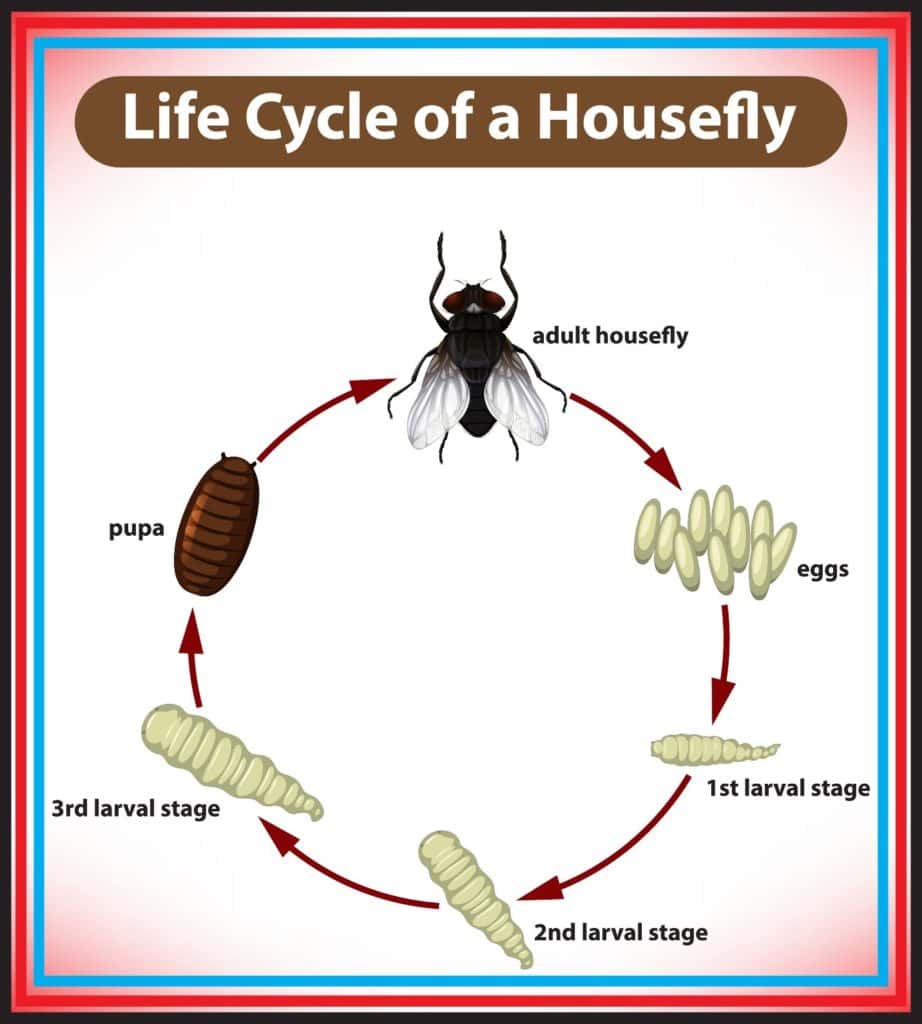
How Do Houseflies Spread Disease?
Houseflies carry over 100 pathogens, such as salmonella, malaria, and tuberculosis, among many others, that they can spread when they land on your hamburger or when they lay eggs on your dog’s waste.
Houseflies eat pieces of food or garbage, throw them back up, and then eat them again in liquefied form. When flies go through this eating process on your counter or table, they’re spreading bacteria.
Houseflies lay their eggs in the same places where they eat. Houseflies will lay their eggs on garbage, manure (including any dog or cat feces), and dead animals.
How to Know if You Have Houseflies or Cluster Flies
Cluster flies get into houses to establish a place to live. As their name suggests, they congregate in large numbers. Often in attics.
They can get in through any type of small opening. The best way to keep cluster flies out of your house is to seal any gaps, cracks, or other openings.
Related:
How to Keep Bugs Out of a House
Cluster flies absolutely do look similar to houseflies. However, there are three things to look for to properly identify your flies:
- Cluster flies are larger– 8-10 mm in length, while houseflies are about 6-7 mm long
- Cluster flies are “clumsy” fliers
- Cluster flies do more “clustering” than houseflies
- Cluster flies do not seek out dirty surfaces for food
- Cluster flies feed on “cleaner” organic matter such as sap, honeydew, plant nectar, and other mostly harmless things.
- Cluster flies do not carry pathogens
Houseflies vs. Cluster Flies
Houseflies and cluster flies look similar; however, there are differences.
Whereas Houseflies will land, consume, and lay their eggs within filth, cluster flies don’t seek out dirty surfaces for meals.
And unlike house flies, cluster flies also do not spread disease.
Where Do Cluster Flies Come From?
Cluster flies lay eggs in the soil. Those eggs hatch and eventually morph into adults that look like large houseflies. In the adult stage, they fly around as you would expect – looking for light, warmth, food, and water.